From the Blog
Education's "Canary in the Coal Mine" Moment: AI Isn't Working and What Every Principal Should Know

Less than four years since the release of ChatGPT, the debate over how to best implement AI in the classroom is as hot as ever.
Here in Australia, the conference circuit is characterised by a compulsion to innovate.
Often, at these events, the keynote speakers, or so-called "AI innovators", each tout to the audience of school leaders, who look up at them wide-eyed, awestruck and excited, new and creative ways they claim AI can be integrated into practice.
These same people, eager to show off just how forward-thinking they are, dominate the LinkedIn feeds of many school decision makers who, whether they'd like to admit it or not, draw inspiration from these self-proclaimed experts to inform policy and practice at their own schools.
Technological innovation in education has become a cult movement that, unfortunately, too many educators have subscribed to as the framework within which they believe they must plan and deliver their practice.
The reality is that this is causing significantly more harm to their students than good, especially now that AI has become the new obsession for these tech-evangelists.
The author and neuroscientist Jared Cooney Horvath, PhD, MEd, in his book The Digital Delusion, perfectly articulates just how absurd and dangerous it really is for educators to want to adopt AI so soon without any solid evidence to prove it's safe, never mind effective.
"Imagine this: a pharmaceutical company develops a new drug. The problem? They have no idea what it does—no clue what it treats, how effective it is, or what side effects it might have. Undeterred, they release it globally with no testing or usage guidelines. Rather than pushing back, governments, businesses, and schools all jump on board. Billions of doses are handed out, and patients are told to figure out for themselves what the drug is good for."
— Jared Cooney Horvath, The Digital Delusion (p.107)
Does this sound familiar?
Right now, everyone has an opinion on AI in education. But opinions are not evidence, and the drug has already been handed out.
So, on that note, let's diagnose GenAI's impact on education almost four years after ChatGPT went airborne.
Let's start by looking at what teachers are observing in their classrooms.
Just recently, a 2026 survey conducted by Learning First, which surveyed a sample of 4,143 educators (consisting of 3,377 teachers and 766 school leaders), found that 56% of teachers indicated that students in Years 11-12 are using AI for schoolwork, while 43% reported the same behaviour among students in Years 7-10.
It's easy to skim past those numbers and keep reading, but please take a moment and register the scale of AI's impact on schools right now.
It's also worth noting that student AI adoption is likely even more widespread and less transparent than this survey reports, given that many teachers note that they cannot easily identify how often or in what ways students employ AI for learning tasks and assessment writing.
Let's take a look at another excellent survey by the Office for Youth NSW, which looked at self-reported AI use by students.
This is some seriously valuable data, especially in an Australian context and considering how new the field is.
The survey revealed that 53% of 13-17-year-olds and 42% of 10-12-year-olds use AI to assist with studying and homework. When asked about assessment writing specifically, the researchers found that 44% of the older cohort and 39% of the younger cohort reported employing AI for assessment writing.
Again, these numbers serve as a minimum and only account for students who answered honestly. It's likely that student use is far more common.
So, if we were to base our diagnosis on the findings of these two surveys, both of which, by the way, were released in 2026, it would be fair to say that thus far, AI's impact on education should be one our leaders scramble to inoculate against rather than prescribe more of.
This is the reality of AI in education and should be the point of focus on conference stages, staff meetings, and LinkedIn posts, not more cleverness that no time-poor teacher could realistically ever put into practice.
Let's not get distracted by innovation.
Action to defend assessment and learning against AI should take precedence over action to innovate and adopt.
I think this is pretty reasonable, and is honestly the most responsible position to take as adults who have a duty of care to protect children.
This is especially true if it's innovation for innovation's sake, which is what the push to adopt AI into classroom practice and student learning feels like right now.
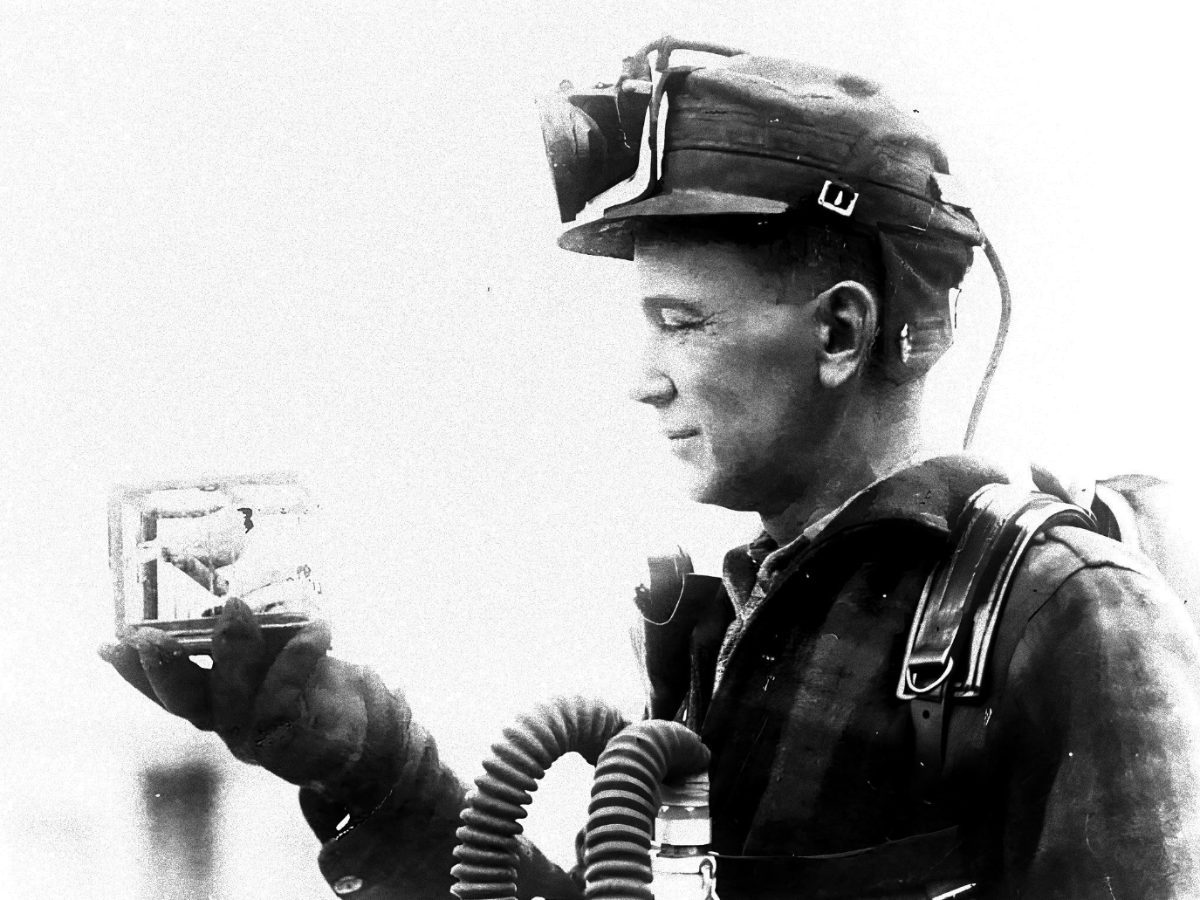
This is a canary in the coal mine moment, and I urge readers to take a moment and consider the import of what's at stake if school leaders fail to protect against student AI use.
Teachers are the ones in the classroom having to navigate the real-world impacts that tools like ChatGPT are having on our youngest and most vulnerable citizens.
Teachers are at the coalface, and they are sounding the alarm.
These are our students, and they are counting on us to protect them and their futures.
We cannot let AI be another case study of inaction, just as social media was.
It's time for urgent action.
References
Horvath, J. C. (2025). The digital delusion: How classroom technology harms our kids' learning—and how to help them thrive again. Simon & Schuster.
Learning First. (2026, May 24). AI use in schools: Taking action now. Learning First.
NSW Office for Youth. (2026). NSW Youth Week 2026 polling report. The Insight Centre for the NSW Office for Youth.